Daihatsu Cuore L701S – Rear Brake Problems, Toyota Starlet Proportioning Valve Compatibility and a €10 Salvage Yard Solution
Location: Flanders, Belgium
Vehicle: Daihatsu Cuore L701S – EJ-VE engine – Without ABS
1. Introduction
I own a Daihatsu Cuore L701S with the EJ-VE engine, without ABS.
I would like to share my experience with a rear brake problem that turned into quite a long investigation.
This entire experience took place in Flanders, Belgium, where vehicles must pass an official roadworthiness inspection (technical inspection).
What initially seemed like a straightforward brake repair eventually involved replacing several components, measuring hydraulic pressure, researching Toyota and Daihatsu parts compatibility and investigating the mechanical condition of the rear brake drums.
Eventually, I found a Toyota replacement part that fitted my Cuore and helped solve the problem.
I hope this information will help other Daihatsu, Perodua and Toyota owners around the world, especially those who are struggling to find original replacement parts.
2. The original problem – discovered during the Belgian vehicle inspection
The problem was discovered during the official Belgian roadworthiness inspection.
During the brake test, the inspector found that the braking forces at the rear wheels were not balanced correctly between the left and right sides.
As a result, my Daihatsu Cuore failed the inspection.
I started investigating the entire rear braking system rather than simply adjusting the brakes to try to pass the inspection.
During the investigation, I also discovered that one of the old rear wheel cylinders had been leaking.
The old cylinder seals were in poor condition. During earlier repeated testing on the brake tester, one of the seals eventually failed under pressure.
3. Replacing the rear brake components
I replaced the following components:
-
Both rear wheel cylinders.
-
Rear brake shoes.
The brake system was subsequently inspected and tested again.
However, the braking force on the brake tester was still unequal.
This made me investigate another possible cause: the rear brake proportioning valve.
4. The difficult search for an original Daihatsu proportioning valve
Finding an original replacement proportioning valve for the Daihatsu Cuore L701S was not easy.
I checked YoshiParts, but the original Daihatsu part was not available.
A Toyota variant was available through YoshiParts, but the price was approximately €480 including shipping to Belgium.
For a small car like the Cuore, that is a considerable amount of money for one brake component.
I therefore started researching alternatives and investigating which Toyota and Daihatsu models might use a similar component.
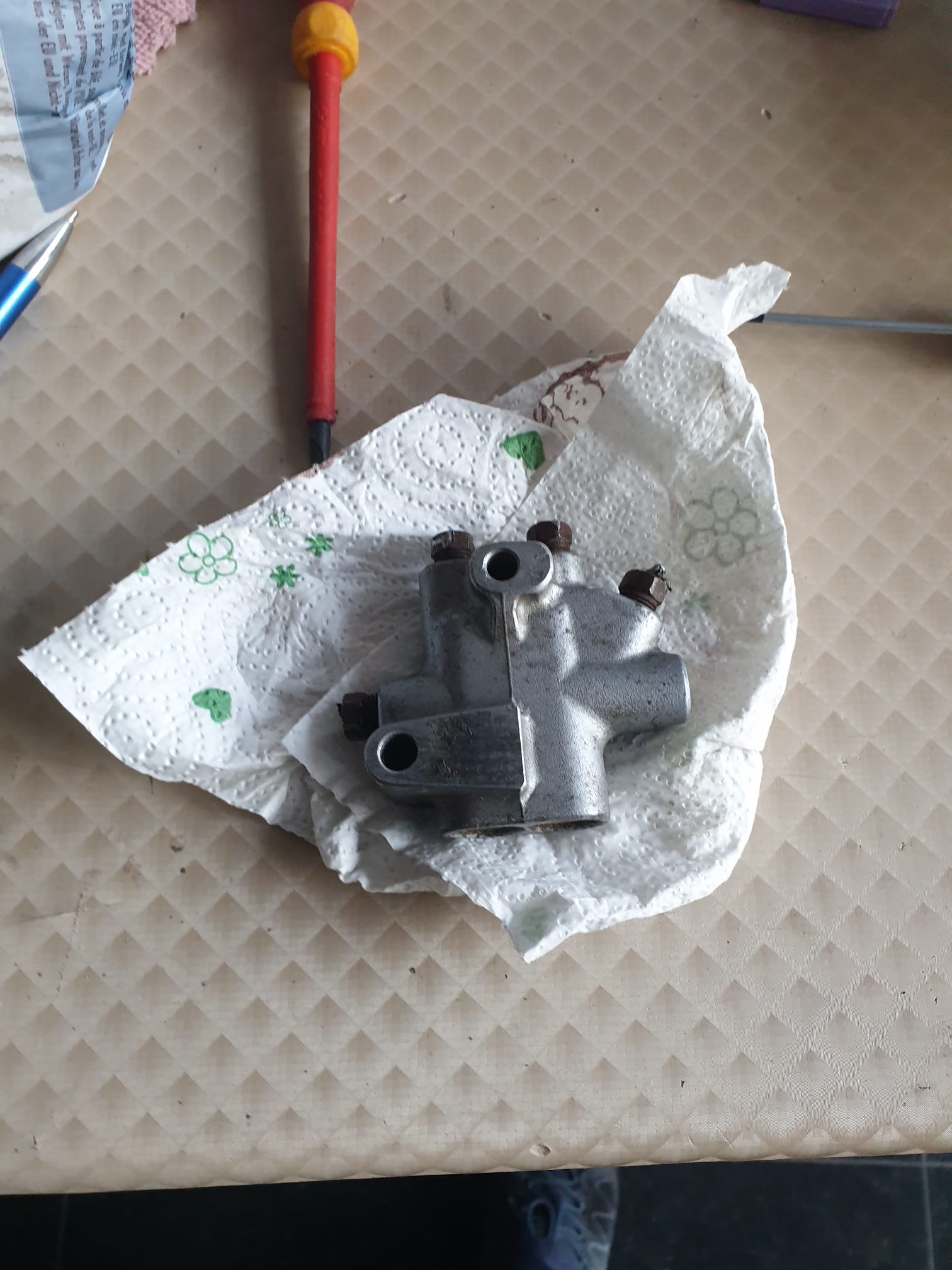
Eventually, I found a Toyota Starlet EP91 at a self-service salvage yard.
I removed the proportioning valve myself.
The price of the used Toyota valve was only €10!
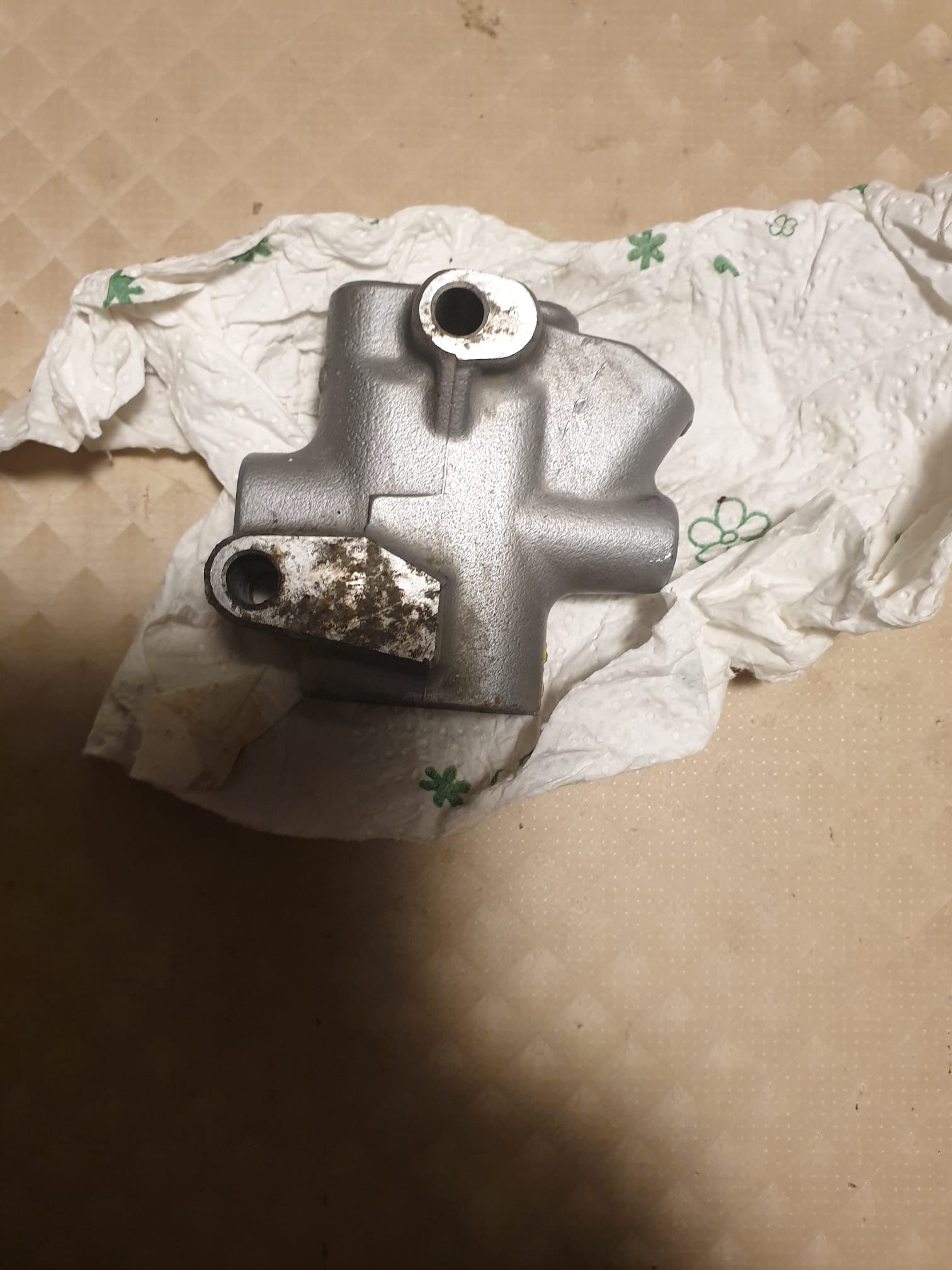
The Toyota valve carries a NISSIN marking and the identification marking 7P24A4.
When comparing it with the original Daihatsu valve, the two looked identical. The housing, mounting points and connections matched.
I installed the Toyota valve on my Daihatsu Cuore, and it fitted correctly without modifications.
5. Hydraulic pressure measurements – before and after replacing the valve
Together with my garage mechanic, we measured the hydraulic pressure at the left and right rear brakes using two pressure gauges.
We performed these measurements before and after replacing the original Daihatsu proportioning valve.
Before replacement:
The hydraulic pressure measured at the left and right rear brakes was not equal.
After installing the Toyota Starlet EP91 NISSIN valve:
The pressure measurements at the left and right rear brakes were equal, giving a 50/50 left-to-right pressure distribution in the measurements we performed.
It is important to clarify that this 50/50 result refers specifically to the hydraulic pressure measured between the two rear brakes.
It does NOT mean a 50/50 pressure distribution between the front and rear axles.
However, despite the equal hydraulic pressure at the rear wheels, the brake tester still showed unequal braking force.
This demonstrated that equal hydraulic pressure does not necessarily mean equal braking force at the wheels.
6. Discovering the remaining problem – the brake drums
We then investigated the mechanical contact between the new brake shoes and the brake drums.
The shoes were not making even contact across their full width.
My mechanic suspected that the friction surfaces of the drums were not perfectly even.
The drums were still within the usable thickness according to my mechanic.
We decided to swap the left and right brake drums.
After swapping them, the brake shoes started making better contact with the drum surfaces.
The final brake tester result was excellent: the braking force was now balanced at 50/50 between the left and right rear wheels.
This was a separate result from the earlier hydraulic pressure measurements.
The Toyota valve had already corrected the measured left-to-right hydraulic pressure imbalance. Swapping the drums resolved the remaining mechanical braking imbalance.
This was an important discovery: the proportioning valve was not the only factor involved in the original problem.
7. How the rear brake proportioning valve works
The purpose of a rear brake proportioning valve is to control the hydraulic pressure supplied to the rear brakes.
During braking, weight transfers towards the front of the vehicle. The rear axle becomes lighter, which means the rear wheels are more likely to lock if they receive too much braking force.
A conventional pressure-sensitive proportioning valve works roughly as follows:
-
When the brake pedal is pressed lightly, hydraulic pressure is transmitted to the brakes.
-
The proportioning valve initially allows rear brake pressure to rise.
-
Once a certain pressure threshold is reached, an internal piston and spring mechanism starts limiting the increase in rear brake pressure.
-
When the driver presses the pedal harder, rear pressure continues to increase, but at a lower rate than the pressure supplied to the front brakes.
-
When the brake pedal is released, the hydraulic pressure drops and the valve returns to its normal position.
The valve therefore does not simply divide braking pressure 50/50 between the front and rear axles.
It controls the relationship between front and rear hydraulic pressure to help prevent premature rear-wheel lock-up.
The exact pressure curve depends on the design and specification of the valve.
It is also important to understand the difference between hydraulic pressure and actual braking force:
-
Hydraulic pressure is the pressure measured in the brake lines.
-
Braking force is the actual force produced at the wheels and measured on a brake tester.
Equal hydraulic pressure does not automatically produce equal braking force. Wheel cylinders, brake shoe adjustment, drum condition, friction material and shoe-to-drum contact all influence the final result.
8. Other vehicles worth investigating for replacement parts
During my research, I discovered several related models that may be useful when looking for replacement parts.
These are potential donor vehicles and research leads, not a confirmed list of interchangeable proportioning valves.
Daihatsu and Perodua
-
Daihatsu Cuore L701.
-
Daihatsu Sirion M100, particularly non-ABS versions.
-
Perodua Kelisa, based on the L701 platform.
-
Other Perodua models from the same family may also be worth investigating.
Toyota
-
Toyota Starlet EP91 – the donor vehicle for my replacement valve.
-
Toyota Duet M100.
-
Certain Toyota Corolla models.
-
Certain Toyota Camry models.
Toyota used different proportioning valve part numbers across its models and generations.
For example, the Toyota Duet M100 has a proportioning valve listed under part number 47150-97202. This is an interesting research lead, but it does not prove that it has the same internal pressure characteristics as the Starlet valve.
Subaru
- Certain Subaru Justy models may also be worth investigating.
However, I have not yet established whether the Subaru Justy uses the same NISSIN valve or an interchangeable version. This requires further research.
Important: These are possible donor vehicles to investigate, not confirmed interchangeable applications. Always check the exact part number, ABS configuration, connections, hydraulic circuit layout and pressure characteristics before fitting a replacement.
9. Final work and results
After all the investigations and repairs, the following work was completed:
-
Toyota Starlet EP91 NISSIN proportioning valve installed.
-
Both rear wheel cylinders replaced.
-
Rear brake shoes replaced.
-
Rear brake drums swapped left to right.
-
Handbrake adjusted.
-
Complete brake system bled.
-
Old brake fluid replaced with fresh DOT 4 brake fluid.
-
Entire system checked for leaks.
There are no brake fluid leaks.
The handbrake has also been adjusted.
The complete braking system has been checked again.
Final result: the brake tester now shows balanced 50/50 braking force between the left and right rear wheels.
The braking system is now performing correctly on the brake tester, and I am hoping to pass the next Belgian roadworthiness inspection.
10. Conclusion – A €10 Toyota solution for a Daihatsu
My experience shows how useful it can be to investigate parts from related manufacturers.
The original Daihatsu part was unavailable at YoshiParts. A Toyota alternative was listed for approximately €480 including shipping to Belgium.
Instead, I found a Toyota Starlet EP91 at a self-service salvage yard and removed the NISSIN proportioning valve myself for just €10.
It fitted my Daihatsu Cuore L701S without modifications and worked in the installed braking system.
I have confirmed the physical fit and tested the braking system after installation. However, I have not independently compared the complete internal pressure curve of the Toyota valve with the original Daihatsu specification.
The final successful result also required correcting the uneven contact between the brake shoes and drums.
My advice to other owners
Do not immediately assume that an uneven brake test result is caused by the proportioning valve.
Check the complete braking system, including:
-
Wheel cylinders.
-
Brake shoes.
-
Brake drums.
-
Brake adjustment.
-
Hydraulic pressure.
-
Mechanical contact between the shoes and drums.
And before spending hundreds of euros on a rare original part, investigate whether a suitable replacement might be available from a related Toyota, Daihatsu or Perodua model.
Sometimes a €10 part and a lot of detective work can save you a considerable amount of money!
I hope this information helps other Daihatsu Cuore L701S owners and anyone maintaining these older Japanese small cars.
If anyone has additional information about the NISSIN 7P24A4 valve, Toyota/Daihatsu cross-references or other compatible applications, I would be very interested to hear about it.
Greetings from Flanders, Belgium!