Because my dishwasher was full enough to run, I set my priorities on finishing modifying my sandwich plate.
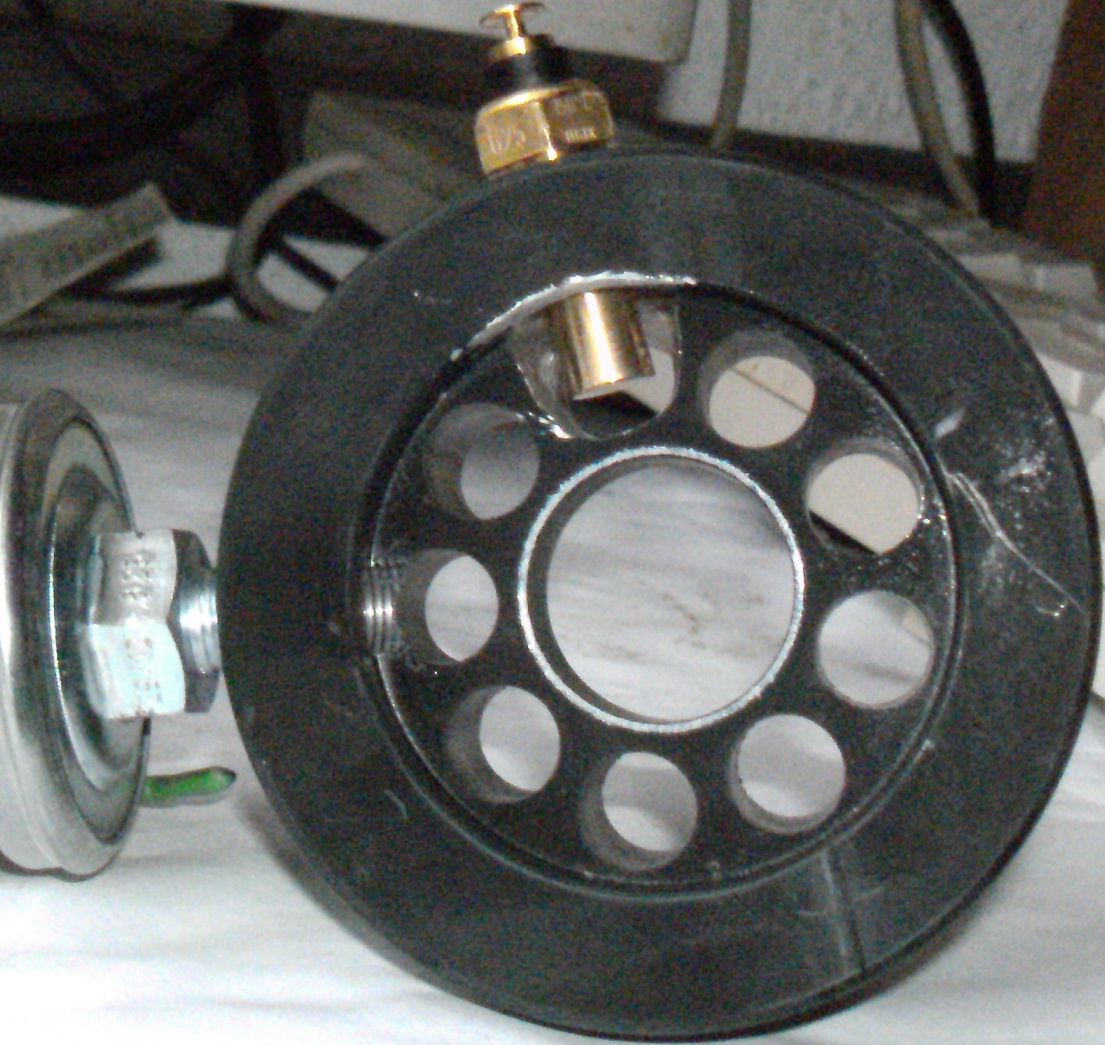
I started off by removing either the paint finish or powder coating from where the extension pipe was to fasten the plate, in order to secure the earth (ground) contact required to run the guage set.
The alternative would have involved drilling and tapping the plate’s exterior for mounting a n earth cable. Electro-chemiocal corrosion would have more likely taken place in such a set-up. I’ve not yet seen corrosion take place between aluminium and dissimilar metals, when both were immersed in oil. It’ll be interesting to find out. Once both guages suddenly go out, that’ll be proof of discarding this theory.
I initially planned on using valve grind compound. But, couldn’t find it. Maybe, that was better, because any trace of it remaining to pollute the oil gallery is the last thing anyone would want. Not finding the compound was possibly a blessing in disguise. Instead, I buried the plate in sand and then started twisting the pipe against the plate, until a rough surface appeared:
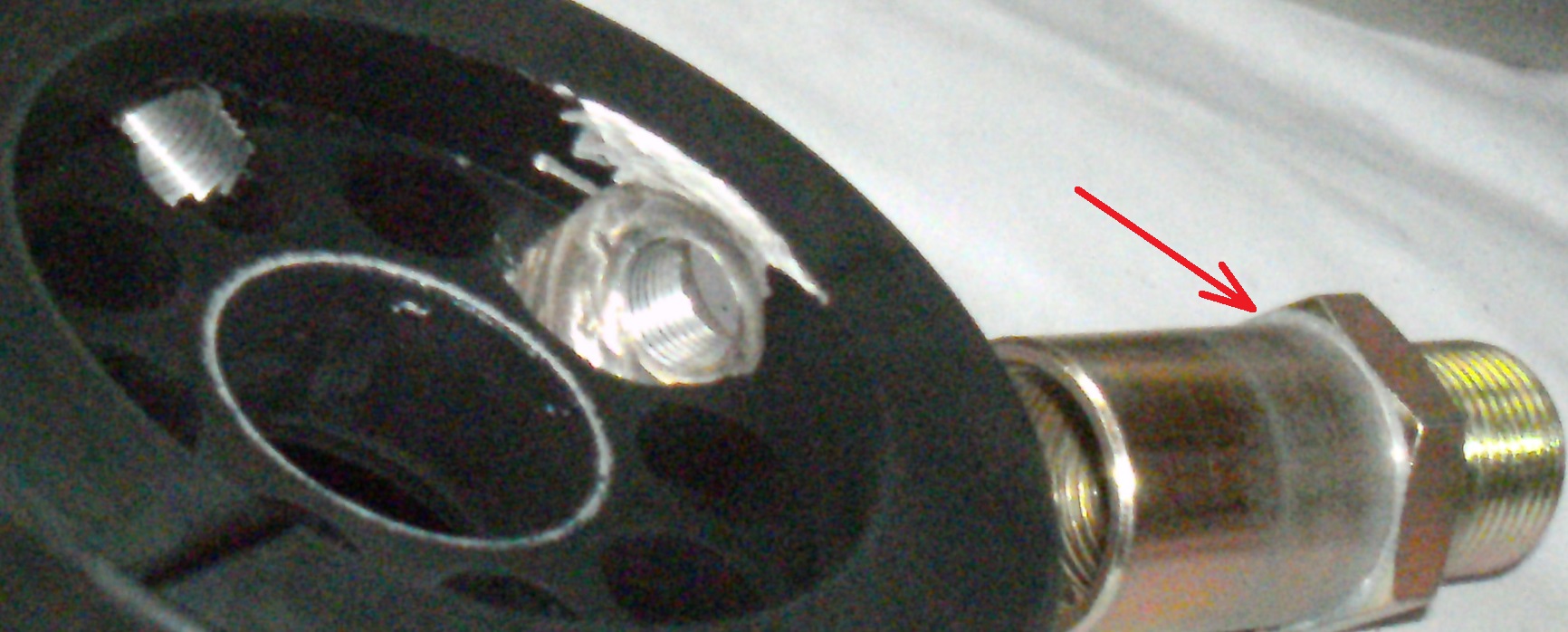
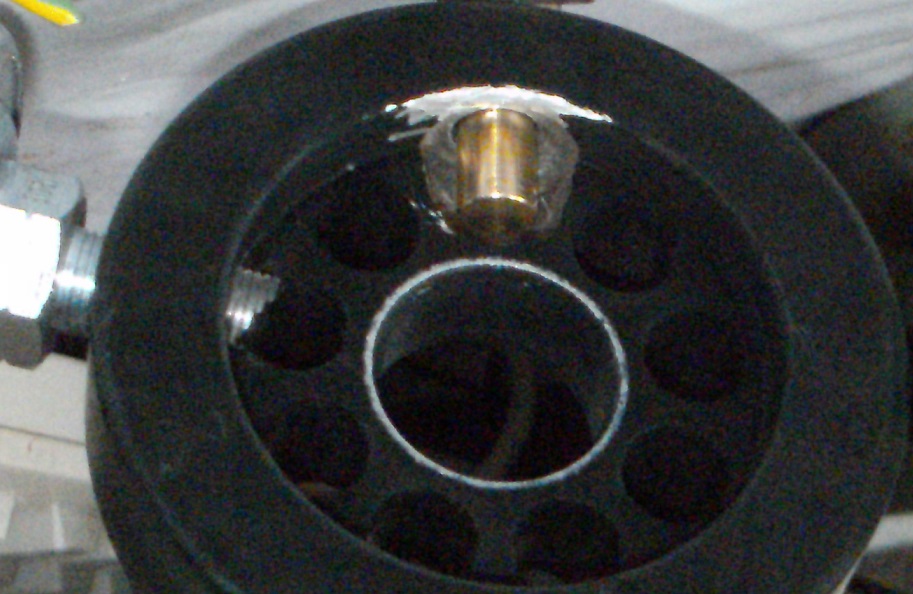
Obviously most time-consuming and risky was the porting-out of the temperature sensor’s location. The tapping alone required repetitive cutting and even chasing the outter opening, using an 11 mm drill bit, in order to be able to locate the sensor further into the plate, exposing as much sensor surface to oil flow as possible.
Idealy, the best place for this sensor would have been in the block. That, however, was the last place I would have wanted to cut threads into, as long as the engine wasn’t disassembled for cleansing. Most important would be knowing at what temperature the oil’s at, when leaving the engine block. Not at entry:
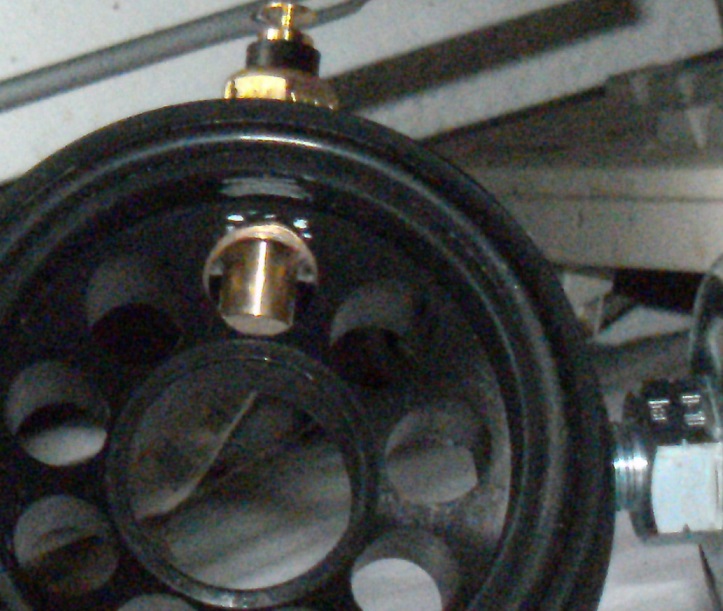
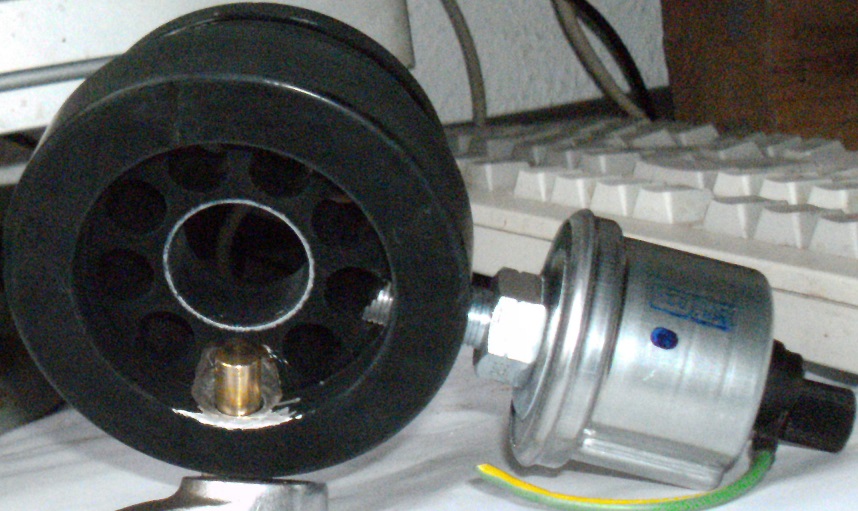
The most stable Dremel bit used was one which was barrel-shaped. Porting with a globe-shaped porting bit was tricky and needed constant concentration on the porting and a firm grip on the tool itself. Not using a Dremel, I wasn’t used to this substitute’s chuck construction which tended to rub on the plate’s surface not intended to get damaged. Nevertheless, the damage looks more dramatic in the following image than it really is:
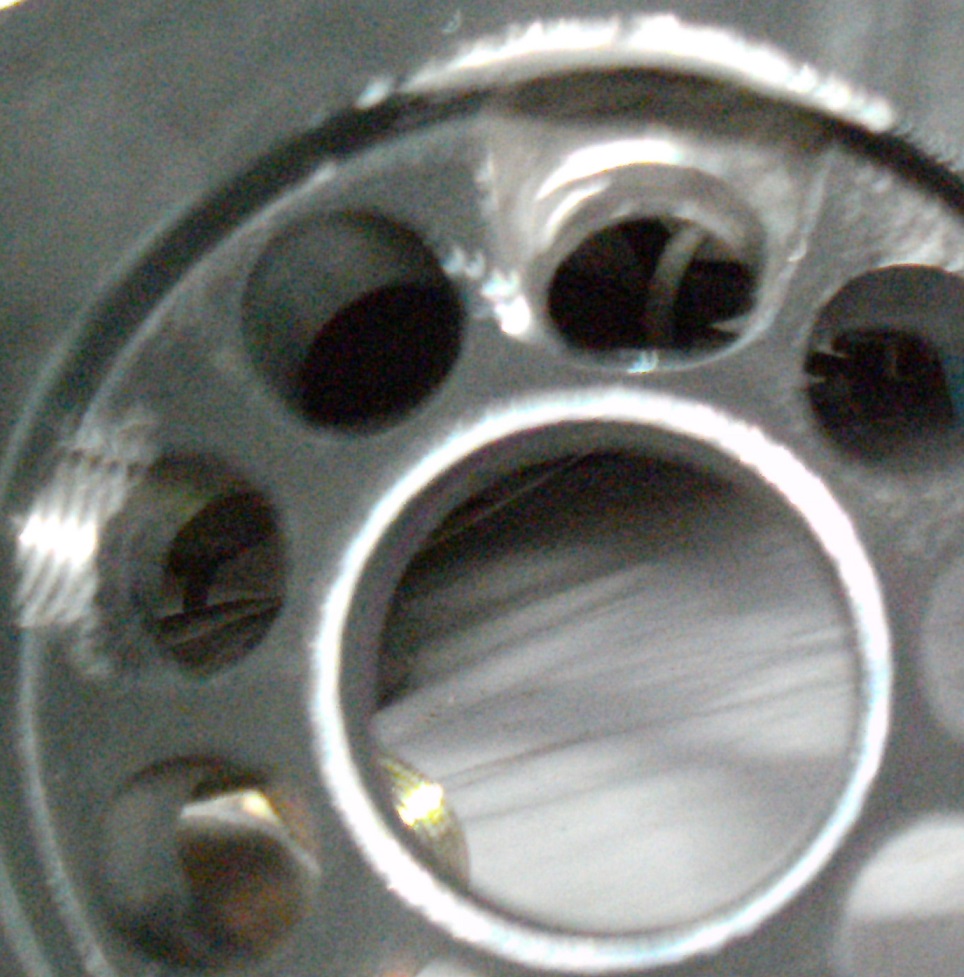
A made it a point to even get the pressure sender as far into the plate as possible, in order to reduce leverage forces on its stem, when vibration exerts its forces. This was probably an overcautious measure, given that these forces would have been much greater, if the filter assemble would have been mounted 90° from where it was.
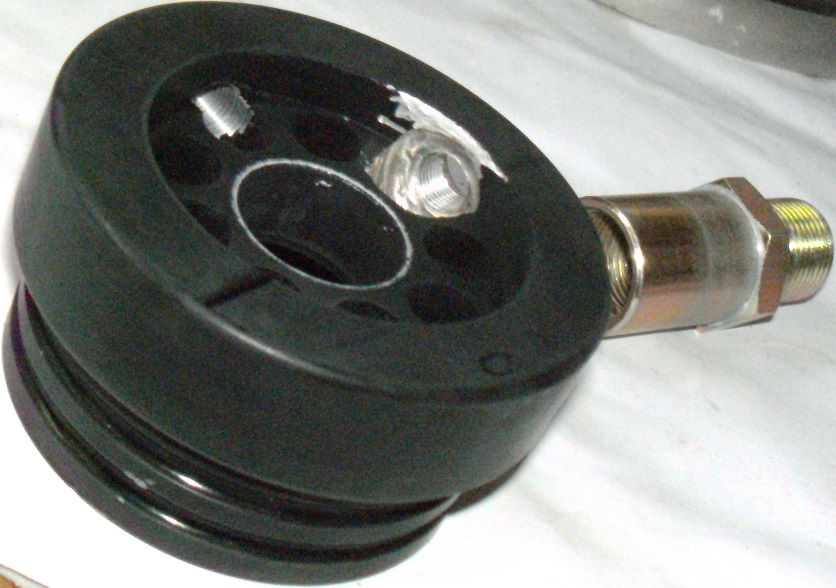
Also noticeable is how dishwasher detergent roughens up a painted finish. This could only help dissipate heat better.
I’ll make it a point to see if any paint surface erosion has taken place, during the next oil change. If so, it would be best to remove all paint exposed to oil, while I’m down there replacing the filter: